


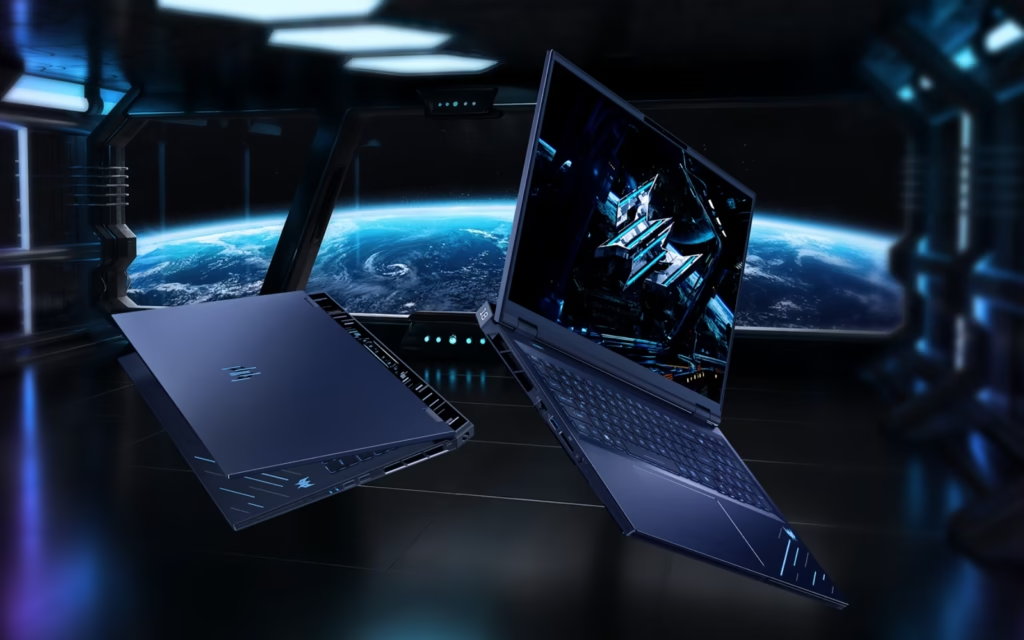
If you thought the premium laptop arms race was winding down, Acer just shoved a fresh set of rockets under it. At IFA 2025, the company unveiled the Predator Helios 18P AI, an 18-inch machine that reads like a checklist for “what would you build if money and thermals weren’t an immediate concern”: a 4K Mini-LED panel, a desktop-class NVIDIA GeForce RTX 5090 laptop GPU option, Intel’s new Core Ultra 9 285HX, and workstation-grade touches like ECC memory. It’s a power play that blurs the line between desktop replacement and portable workstation.
The Helios 18P’s headline is the display: an 18-inch 4K Mini-LED panel running at 120Hz in a 16:10-ish area that gives creators and high-fps gamers plenty of real estate and density. Mini-LED brings far better local dimming and contrast than ordinary LCDs, which matters if you’re grading footage, pushing HDR content, or just want deep inky blacks in darker games. Put bluntly, it’s the kind of screen that tempts professionals away from external monitors and into an all-in laptop — if they can stomach the price.
Under the hood Acer is pitching the 18P as both a gaming beast and an “AI” machine for power users: Intel’s Core Ultra 9 285HX is the top of Intel’s mobile stack, and the option of an RTX 5090 — paired with up to 192GB of ECC RAM in some configs — makes clear Acer wants to court people running heavy models, video timelines, or compute-heavy workflows that benefit from GPU muscle and memory reliability. That ECC callout is unusual in laptops and signals the hybrid workstation angle.


Acer also stuffed the Helios 18P with modern connectivity — notably two Thunderbolt 5 ports — plus Wi-Fi 7 and capacious PCIe Gen5 storage options, according to the company. All that silicon needs airflow: Acer is pairing conventional vapor-chamber/heat-pipe designs with beefy fans and even liquid-metal thermal paste in some SKUs to keep clocks up under sustained loads. Build a laptop like this and the engineering tradeoffs show up in chassis thickness, weight, and battery life — which the company hasn’t tried to sugarcoat. This is a desktop-class experience squeezed into a laptop footprint, not a 10-hour ultraportable.
If you were hoping this would be reasonable, Acer’s launch pricing gives you fair warning: the Helios 18P AI starts in Europe near €4,999, with North American availability and pricing still being finalized. In short: this isn’t a mass-market Nitro-tier laptop, it’s a halo product — and one that will command halo money. Acer’s own press materials and major outlets frame it as a “hybrid” for creators who want gaming GPU power without a kitchen-sized desktop.
Acer didn’t forget the other end of the market. The refreshed Nitro V 16 and Nitro V 16S aim to be the “get competitive FPS without mortgaging your life” choices. Both top out at an RTX 5070 and up to Intel Core 270H silicon (or matching AMD options in some SKUs), but they’re much more reasonable on price and timing: Acer and press coverage put the Nitro V 16 launching in October starting at about $999.99 / €1,299, and the slimmer Nitro V 16S following in November starting around $1,099.99 / €1,399. If you want modern cooling, 16-inch screens, and RTX-level ray tracing on a budget, these are the ones to watch.


Who should care (and who shouldn’t)
- Buy the Helios 18P if you’re a creator who needs GPU compute on the go, an indie studio person who wants to demo AAA content without a desktop, or a pro who values ECC memory and a premium 4K Mini-LED panel. It’s also for buyers who accept that peak performance means tradeoffs in portability and price.
- Buy the Nitro V 16/16S if you want modern RTX-class gaming at a midrange budget and prefer a lighter, more wallet-friendly chassis. These are sensible, spec-competitive refreshes that put ray tracing in reach.
- Don’t buy either if you want battery longevity first, or if you’re after the lightest possible travel computer. The Helios is a performance-first machine; the Nitros are value-oriented gaming laptops.
IFA 2025’s Acer announcements underline the split in the laptop market: enormous-screen, near-desktop power for a niche of pros and a steady flow of capable midrange machines for mainstream gamers. The Helios 18P is the sort of “statement” laptop that reminds the industry it still has headroom to chase raw performance, while the Nitro V refreshes do the practical work of refreshing the competitive mainstream. If you’re building a buying shortlist, weigh the Helios on its display and GPU merits — and prepare your bank account accordingly.
Discover more from GadgetBond
Subscribe to get the latest posts sent to your email.


